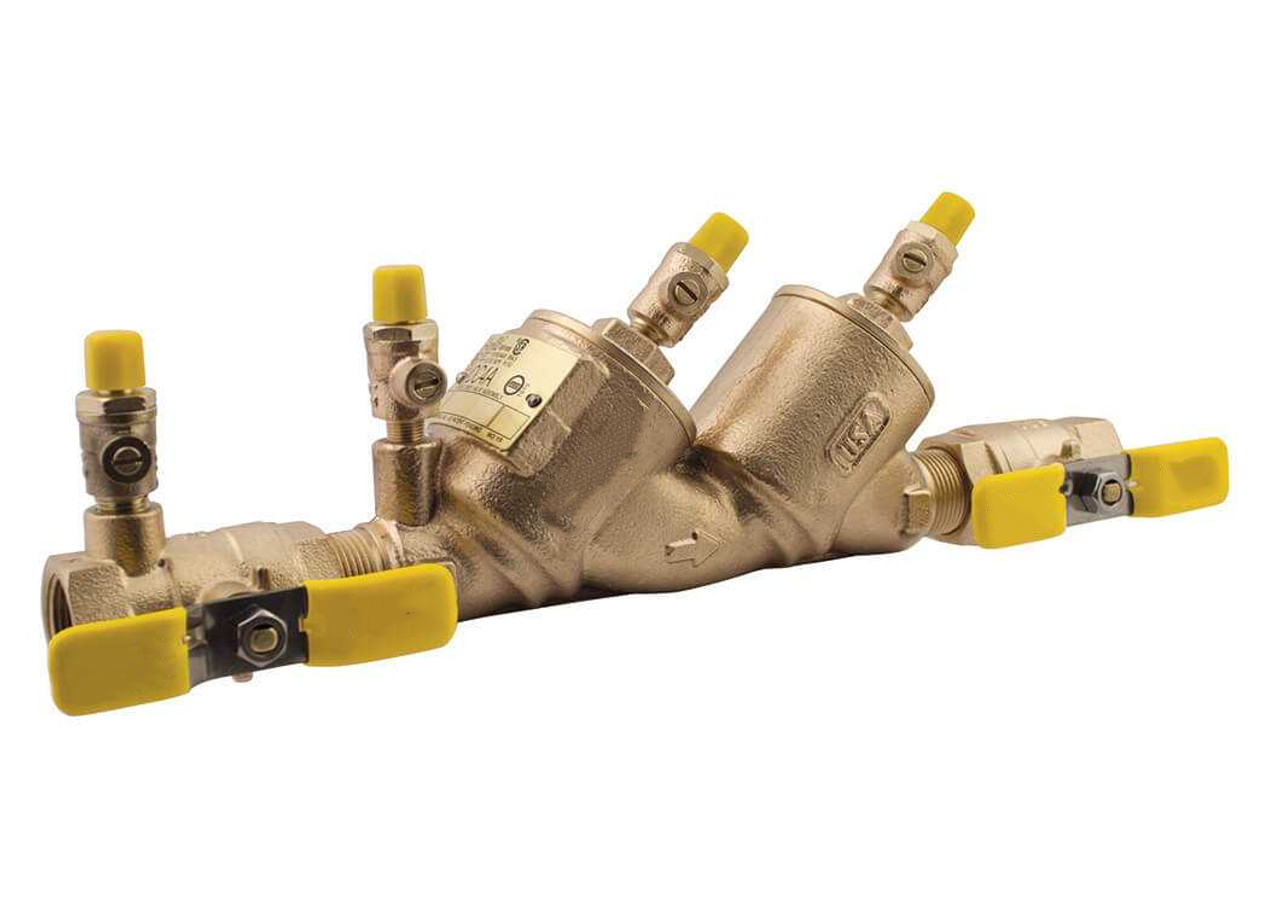
A double check valve is a backflow prevention device commonly required in fire sprinkler systems to keep contaminated water from flowing back into a building’s potable water supply. Fire departments, water authorities, and local code officials rely on double check valves to maintain system integrity, reduce contamination risks, and support uninterrupted fire protection.
At Pye-Barker Fire & Safety, our teams across New York, Long Island, and the greater metro region inspect, test, repair, and replace double check valves in accordance with NFPA standards and local water authority requirements. A properly working device ensures that your sprinkler system has the pressure it needs during an emergency while preventing backflow hazards that can occur when system pressure drops.
How a Double Check Valve Works
A double check valve uses two internally spring-loaded check valves arranged in series. If one side fails or debris prevents a tight seal, the second valve continues to stop reversal of flow. This redundancy is why many jurisdictions accept double check valves for fire sprinkler backflow prevention in low to moderate hazard settings.
According to NFPA 13: Standard for the Installation of Sprinkler Systems and NFPA 25: Standard for the Inspection, Testing, and Maintenance of Water-Based Fire Protection Systems, backflow prevention devices are essential components that protect public water supplies from contamination while maintaining fire protection system reliability.
The American Water Works Association (AWWA) establishes standards for backflow prevention assemblies, emphasizing that double check valves provide critical protection when properly installed and maintained.
Why Your Property Needs Regular Backflow Testing
Local officials often require annual testing to confirm that both check valves open and close correctly, hold pressure, and maintain proper sealing. Research published in the Journal of the American Water Works Association demonstrates that regular testing of backflow prevention devices significantly reduces the risk of water supply contamination.
Over time, valves can wear, corrode, collect debris, or lose spring tension, which can lead to:
Failed backflow tests that require immediate corrective action and retesting.
Contaminated water supply that poses health risks and violates EPA Safe Drinking Water Act requirements.
Reduced sprinkler performance due to pressure loss or restricted flow.
Compliance violations and potential fines from water authorities and code enforcement agencies.
Routine testing ensures reliability and protects your building from avoidable risks. The Foundation for Cross-Connection Control and Hydraulic Research at the University of Southern California provides technical standards emphasizing that annual testing is the minimum frequency for maintaining device effectiveness.
When Replacement or Repair Is Necessary
If a device fails inspection, technicians may rebuild internal components, replace worn check modules, or install a new double check valve assembly. NFPA 25 outlines specific procedures for testing, repair, and replacement of backflow prevention devices to ensure continued protection.
Pye-Barker provides these services for commercial facilities, residential high-rise buildings, educational campuses, healthcare facilities, and other properties that depend on compliant fire sprinkler systems. Our certified technicians follow ASSE International standards for backflow prevention assembly testing and repair.
Understanding Backflow Prevention Requirements
| Component | Function | Testing Frequency | Applicable Standards |
| Double Check Valve Assembly | Prevents backflow through redundant check valves | Annual minimum | NFPA 13, NFPA 25, AWWA, local codes |
| Check Valve #1 | Primary barrier against reverse flow | Part of annual assembly test | ASSE 1015, AWWA C510 |
| Check Valve #2 | Secondary redundant protection | Part of annual assembly test | ASSE 1015, AWWA C510 |
| Test Cocks | Allow pressure testing of assembly | Verified during annual test | NFPA 25, manufacturer specs |
| Shutoff Valves | Isolate assembly for testing/repair | Inspected during annual test | NFPA 25 |
Protect Your System and Stay Compliant
If you are unsure whether your property’s backflow device is due for inspection, our local teams can review your records, test the assembly, and recommend the next steps to keep your system compliant and operational.
Regular testing and maintenance of double check valves not only ensures compliance with water authority requirements but also protects public health and maintains the reliability of your fire protection system when it matters most.
Ready to talk fire protection? Contact Pye-Barker Fire & Safety today to schedule a double check valve inspection or backflow test at your facility.