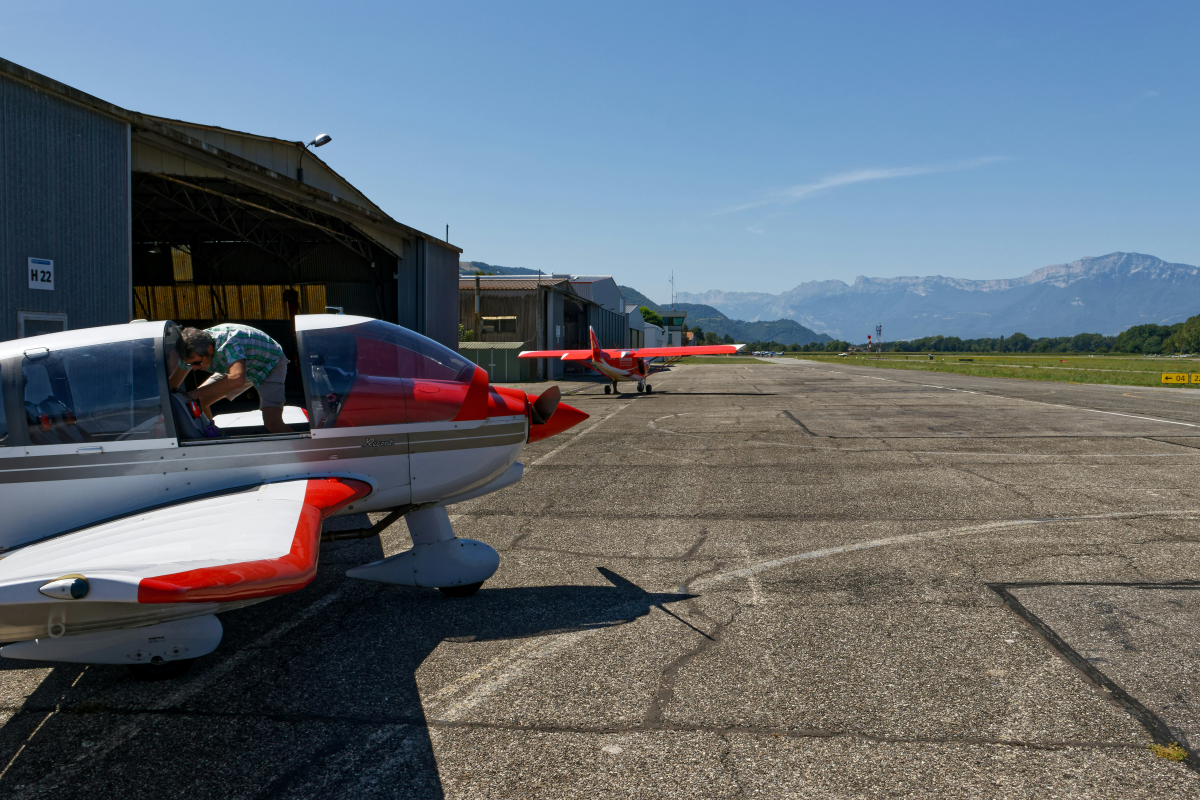
Aircraft hangars house some of the most valuable assets in aviation. These aircraft represent both significant investment and operational readiness. Because of the unique hazards associated with fuel systems, maintenance work, and large open bays, the National Fire Protection Association (NFPA) 409: Standard on Aircraft Hangars serves as the foundation for hangar fire protection design and maintenance across the United States.
Understanding NFPA 409
NFPA 409 establishes minimum fire protection standards for aircraft hangars based on factors including size, construction type, and intended use. The standard categorizes hangars into four primary groups (I–IV), with each classification carrying distinct requirements for fire suppression systems, drainage infrastructure, detection equipment, and electrical installations.
These classifications determine several critical factors: whether foam-water sprinkler systems, high-expansion foam systems, or automatic sprinklers are mandated; the applicable fire area limits and fuel handling protocols; and the necessity for adequate drainage to contain or redirect spilled fuel during fire events.
Group I hangars typically exceed 40,000 square feet and are designed for major aircraft maintenance. These facilities must incorporate foam-water deluge or high-expansion foam systems to address both fuel and heat hazards. Conversely, smaller Group IV hangars may accommodate only light aircraft or serve private owners. These facilities can utilize standard sprinkler protection provided no fueling operations occur inside.
Key Updates And Compliance Considerations
Recent editions of NFPA 409 have introduced changes reflecting modern technology and evolving risk management strategies. Notable updates include:
Alternative suppression agents: Facilities now have the option to use fluorine-free foam concentrates, enabling organizations to meet environmental regulations while maintaining suppression effectiveness.
System design flexibility: Updated guidelines permit performance-based design approaches, allowing engineers to demonstrate equivalent safety where traditional configurations may prove impractical.
Maintenance and testing requirements: NFPA 409 emphasizes routine inspection and testing of foam systems, detection devices, and drainage components. These practices are essential to ensuring systems function properly when needed most.
Hangar operators must also maintain alignment with FAA Advisory Circular 150/5220-18 and local building codes, which frequently reference NFPA 409 or require additional compliance layers.
Why It Matters For Aviation Facilities
A single fire incident in an aircraft hangar can generate millions of dollars in losses and severely disrupt critical flight operations. Proper implementation of NFPA 409 delivers multiple benefits: it reduces the risk of uncontrolled fuel fires, ensures occupant safety during maintenance operations, preserves aircraft along with tooling and structural integrity, and demonstrates compliance with insurers and aviation authorities.
Ignoring or postponing upgrades to meet NFPA 409 standards can result in non-compliance penalties, elevated insurance premiums, and expensive retrofits down the line.
How Pye-Barker Fire & Safety Helps Hangar Operators Stay Compliant
Pye-Barker’s aviation-trained technicians design, install, and maintain foam-water sprinkler systems, detection networks, and alarm monitoring built for NFPA 409 compliance. Our team also provides inspection, testing, and system retrofitting services that ensure hangars meet both federal and local fire protection codes.
Whether it’s a regional maintenance facility or a corporate flight department, our experts help facility managers verify that every component meets current code requirements. From suppression agents to alarm signaling, we ensure reliable protection for people and aircraft alike.
Ready to strengthen your hangar’s fire protection?
Contact Pye-Barker Fire & Safety for a full aviation fire protection assessment. Our team will review your current systems, pinpoint potential gaps, and design NFPA-compliant solutions that safeguard aircraft, personnel, and property. With decades of experience protecting aviation facilities nationwide, we deliver the reliability and expertise your operation demands, because in aviation, every second counts.