
Backflow Preventers
Backflow Preventers for Fire Sprinkler Systems
Backflow Prevention Testing, Inspection, and Service
Backflow preventers protect potable water supplies by preventing contaminated water from flowing back into the public water system through fire sprinkler connections. Pye-Barker Fire & Safety provides backflow preventer services for commercial fire sprinkler systems, including testing, inspection, maintenance, repair, and documentation. These services support compliance with fire codes, plumbing regulations, and local water authority requirements across a wide range of facilities.

Backflow Prevention Device Installation and Configuration
Backflow prevention devices are installed on fire sprinkler system water supplies to prevent reverse water flow into potable systems. Installation is based on system design, water supply characteristics, and local plumbing and fire code requirements. Proper configuration supports compatibility with commercial fire sprinkler systems.
Backflow Testing, Inspection, and Documentation
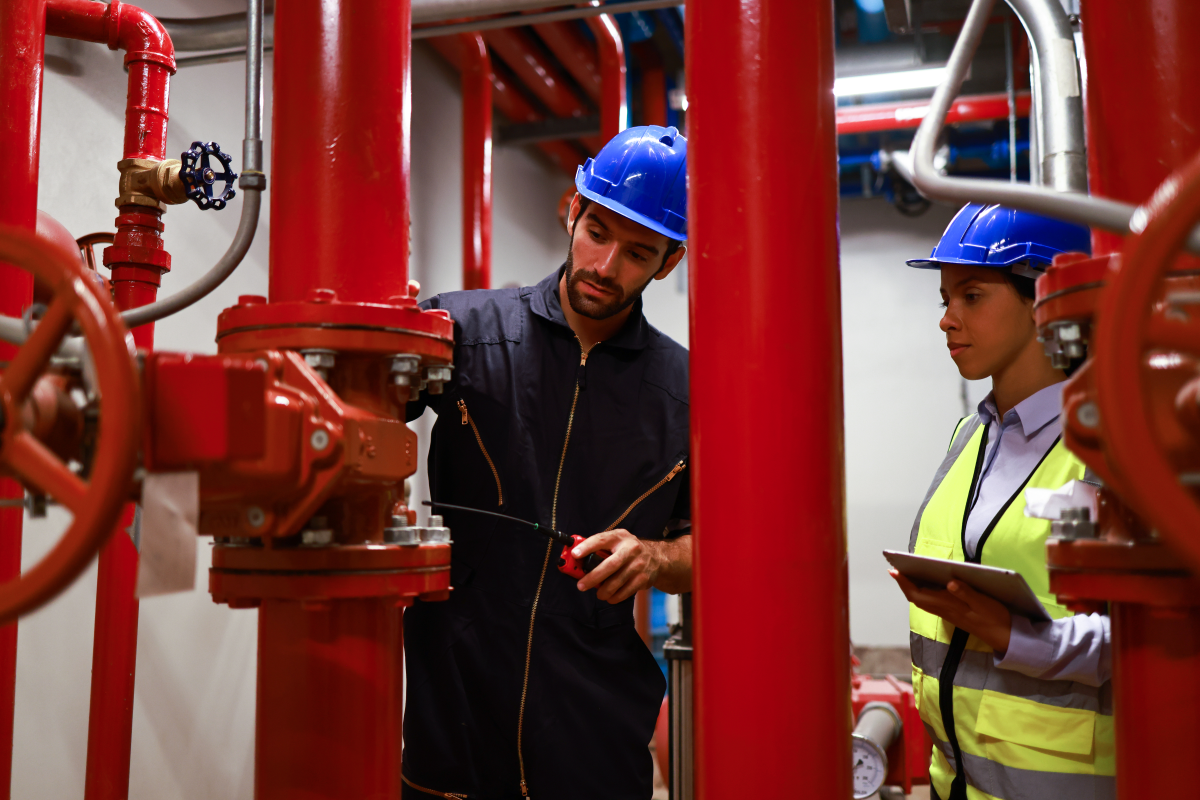
Routine backflow testing and inspection are required by many local water authorities and fire codes. These services review valve operation, pressure performance, and component condition. Testing documentation is often required for compliance, reporting, and audit purposes.
Backflow Repair, Replacement, and System Maintenance
Backflow systems may require repair or replacement due to wear, failed inspections, or code changes. Maintenance services address component issues and support continued system operation. Repair and replacement work is followed by retesting to confirm device functionality.
Frequently Asked Questions
What is a backflow preventer and why is it required for fire sprinkler systems?
A backflow preventer is a device installed on a fire sprinkler system water supply to prevent contaminated water from flowing back into the potable water system. Fire sprinkler systems connect to public water supplies, which makes backflow protection a common requirement under plumbing and fire codes. Backflow preventers help address public health and water safety concerns.
What happens if a backflow preventer fails inspection?
If a backflow preventer fails inspection, repairs or replacement may be required before the system can be returned to service. Failed devices may need cleaning, part replacement, or full assembly replacement depending on the issue. Follow-up testing is typically required after corrective work is completed.
Are backflow preventers required for all fire sprinkler systems?
Backflow preventer requirements depend on system design, water supply configuration, and local plumbing and fire codes. Many commercial fire sprinkler systems require backflow protection, but requirements can vary by jurisdiction. Reviewing local authority having jurisdiction guidelines helps determine applicability.
Pye-Barker has been a pleasure to do business with. Gavin tested our backflows and was very knowledgeable and respectful! Definitely recommend this company!